
Excel allows you to format the appearance of the AutoShapes you place in a worksheet. If you display the Format AutoShape dialog box, you can change all sorts of colors, lines, fills, fonts, and other attributes of the AutoShape. One really nifty formatting feature is to place a picture within an AutoShape. Follow these steps:
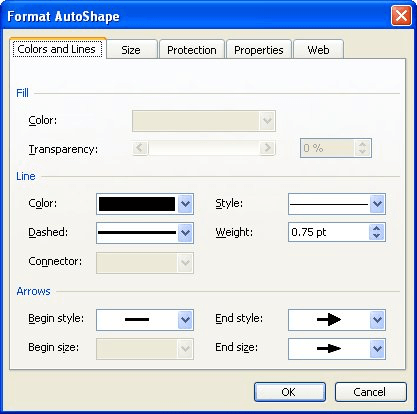
Figure 1. The Colors and Lines tab of the Format AutoShape dialog box.
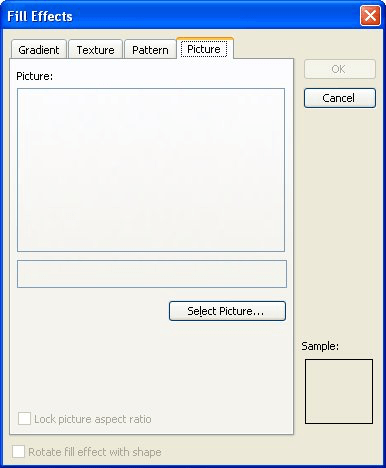
Figure 2. The Picture tab of the Fill Effects dialog box.
The picture you selected in step 8 should now appear in the background of the AutoShape. In most cases the AutoShape looks like a "mask" over the picture, which is a nice effect. You should also use this technique sparingly, as each picture you place in an AutoShape can greatly increase the size of your workbook.
ExcelTips is your source for cost-effective Microsoft Excel training. This tip (2391) applies to Microsoft Excel 97, 2000, 2002, and 2003.

Professional Development Guidance! Four world-class developers offer start-to-finish guidance for building powerful, robust, and secure applications with Excel. The authors show how to consistently make the right design decisions and make the most of Excel's powerful features. Check out Professional Excel Development today!
The graphics capabilities of Excel are flexible enough that you can use the program to create organization charts. Here's ...
Discover MoreWhen you add multiple graphic objects in a worksheet, it can often be beneficial to group those objects together. Here's ...
Discover MoreGraphics can really add pizzazz to a worksheet, but they can also present some drawbacks. If you want to get rid of all ...
Discover MoreFREE SERVICE: Get tips like this every week in ExcelTips, a free productivity newsletter. Enter your address and click "Subscribe."
There are currently no comments for this tip. (Be the first to leave your comment—just use the simple form above!)
Got a version of Excel that uses the menu interface (Excel 97, Excel 2000, Excel 2002, or Excel 2003)? This site is for you! If you use a later version of Excel, visit our ExcelTips site focusing on the ribbon interface.
FREE SERVICE: Get tips like this every week in ExcelTips, a free productivity newsletter. Enter your address and click "Subscribe."
Copyright © 2026 Sharon Parq Associates, Inc.

Comments